Vellozo 1831
Brazil
Section Solananthera
Discovered as early as 1831 by Vellozo, a Portuguese botanist, it was not described until 1881, in the archives of the National Museum of Rio de Janeiro. Despite several synonyms (B. procumbens, B. limmingheiana, B. glaucophylla var. scandens or var. splendens … 12 in all), our present-day Begonia radicans is the last name adopted by botanists under the rule of priority (“Begoniaceae: Annotated Species List”, L.B. Smith, D.C. Wasshausen, J. Golding and C.E. Karegeannes, 1986).
Appearance
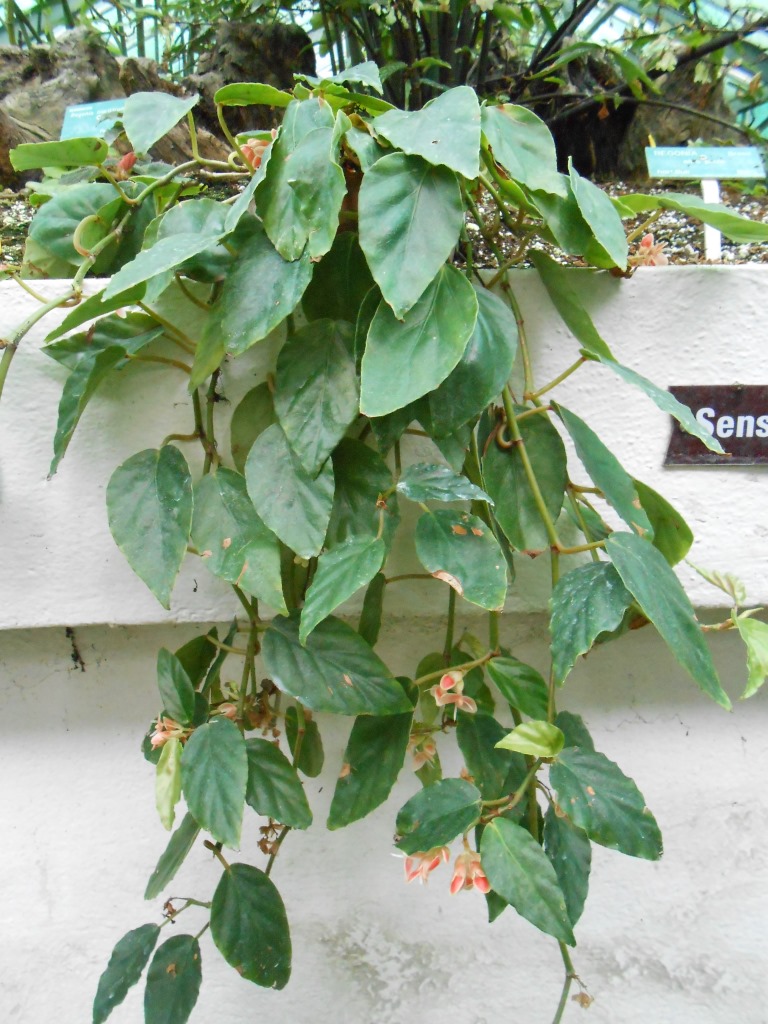
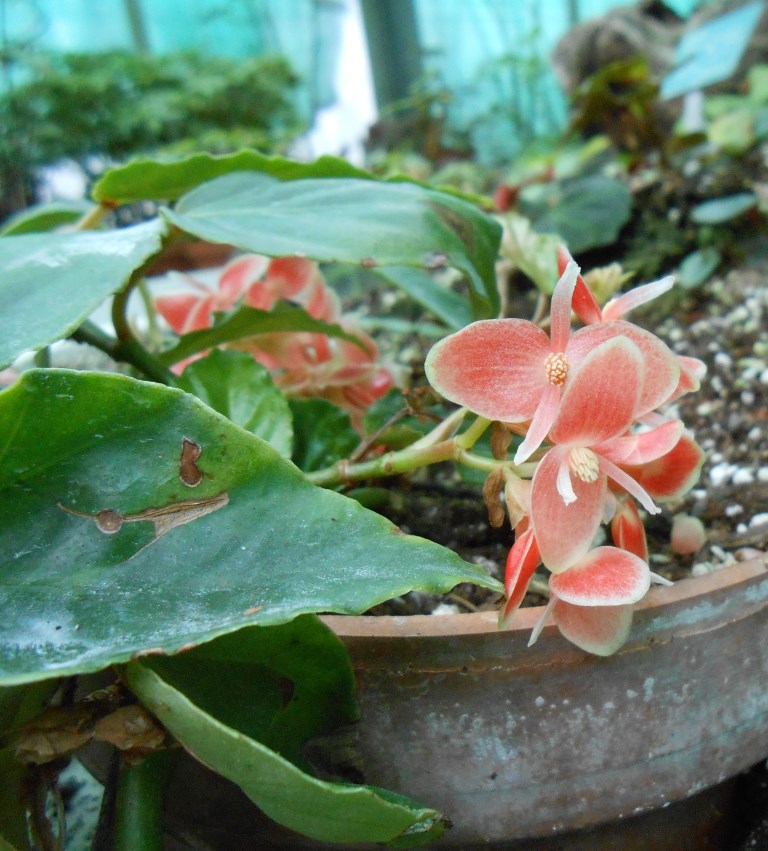
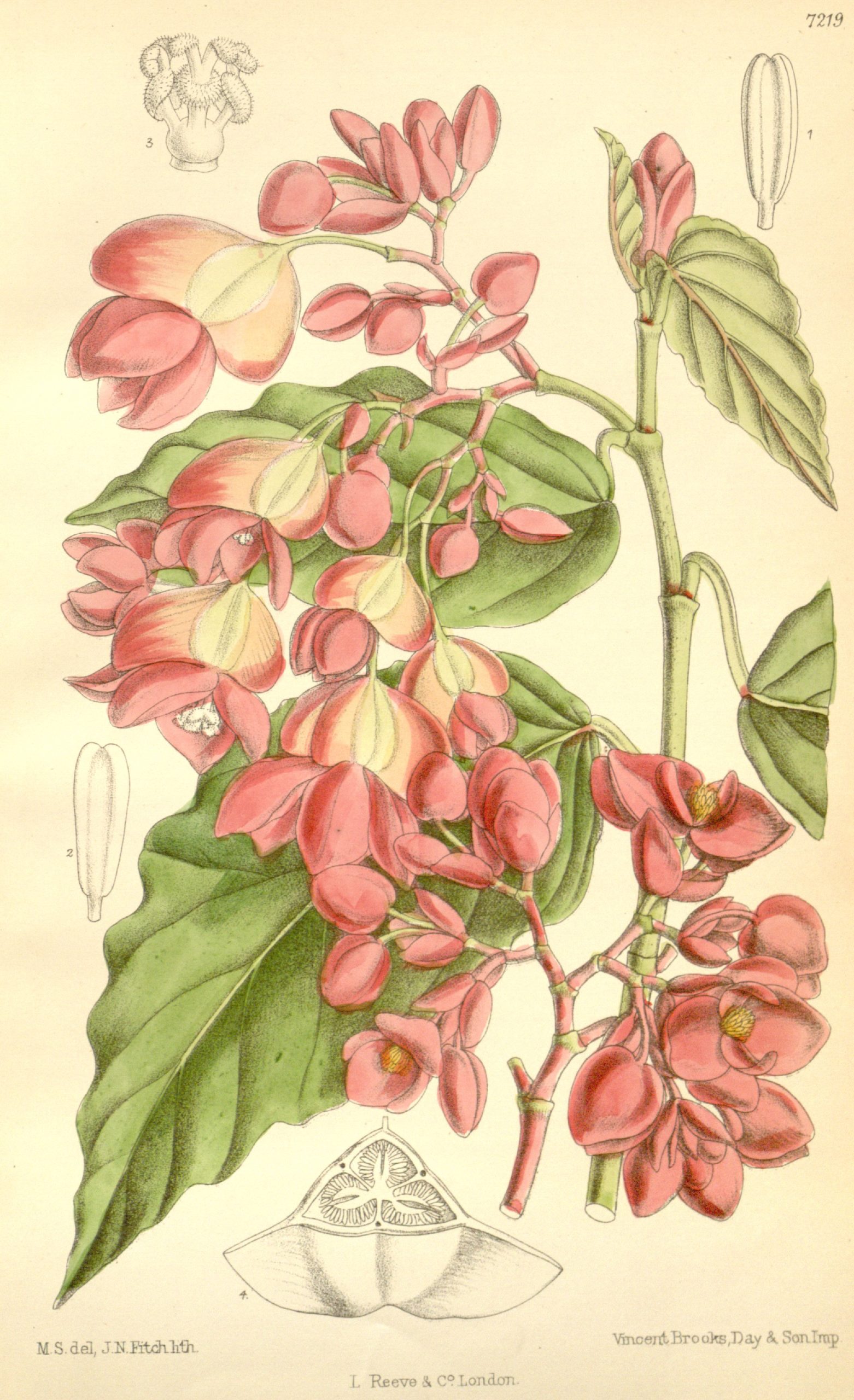
One of the most beautiful hanging-basket plants there is. Long, slender but not spindly branches (easily two metres), glossy green foliage with prominent veins, and large clusters of flowers more coral than orange, the female flowers marked by a white ovary. All it lacks is scent, which several hybridisers have tried to add by crossing it with, among others, Begonia solananthera (B. ‘Fragrant Beauty’) ou Begonia incarnata (B. ‘Florance Carell’).
Culture
Easy, in a hanging basket or as a climber, when it will scale a regularly moistened moss pole. Plenty of light keeps the foliage a good green, but no sun, or the tips will shrivel. Flowers from January–February to April in bright conditions.
Propagation
Traditional stem cuttings, or even seed. The fruits become enormous, and the seeds germinate in 3 to 5 weeks.