Scheidweiler 1848
Brazil
Section Scheidweileria
This begonia with its exceptional foliage was discovered in Brazil in 1848 by DE JONGHE, who brought it back to Europe, to Brussels.
This species has been widely used to create hybrids such as Begonia ‘Benitochiba’ (B. ‘Filigree’ x B. luxurians), Begonia ‘Mrs. Fred T. Scripps’ (B. scharffiana x B. luxurians) and Begonia ‘Lee’s Luxurians’, as well as Begonia ‘Paul Hernandez’ (B. luxurians x B. gehrtii).
Description
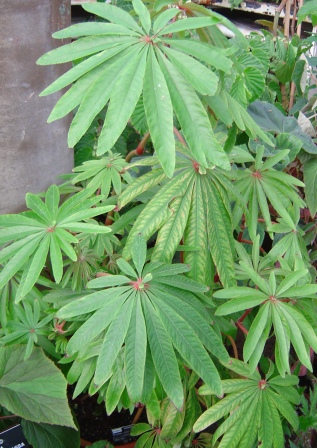
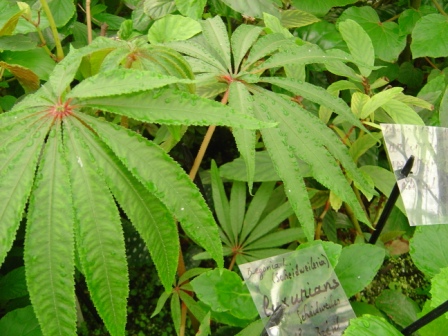
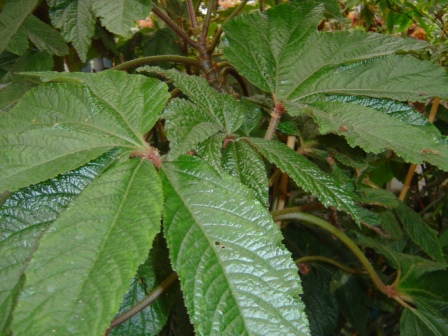
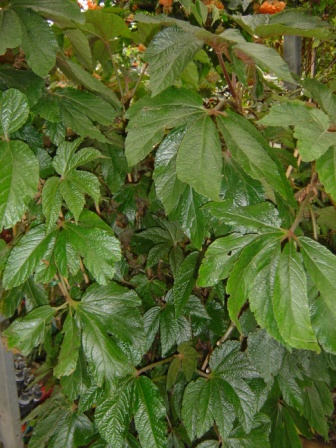
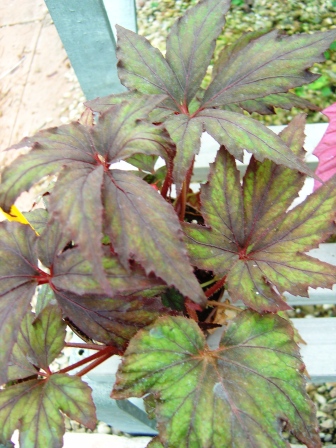
This shrub-like begonia can reach 50 to 80 cm, or much more in ideal conditions. Its leaves, 20 to 30 cm across, are remarkable: digitate, palmate and slightly pubescent, which makes it look like a palm tree and accounts for much of its appeal. They are bright green above and paler green beneath. The stems are thick and knotty. The small, abundant flowers are white and appear in spring and summer.
Culture
It likes warmth, light and regular watering, as well as wide, shallow pots. It is very sensitive to extremes – both overwatering and lack of water – so it remains a tricky plant to grow. Pruning is also rather tedious.
Propagation
In spring or early summer, take tip cuttings, keeping only one leaf cut down by half to limit evapotranspiration. Root them in a closed, covered environment without too much humidity. Sowing seed remains the easiest way to propagate this plant.