Putzeys 1857
India
Section Platycentrum
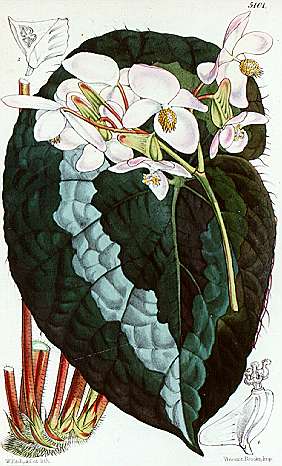
This splendid rhizomatous begonia is surely one of the most legendary Asian begonias. It comes from the temperate foothills of the Himalayas, in the province of Assam, and is the parent species of our Rex Cultorum begonias. It was introduced in 1856 by J. Simon to the Linden nursery (Belgium) and described in 1857 in “La Flore des Serres” by Putzeys, a civil servant at the Belgian Ministry of Justice. It is one of the major, historic introductions of the genus Begonia.
Appearance
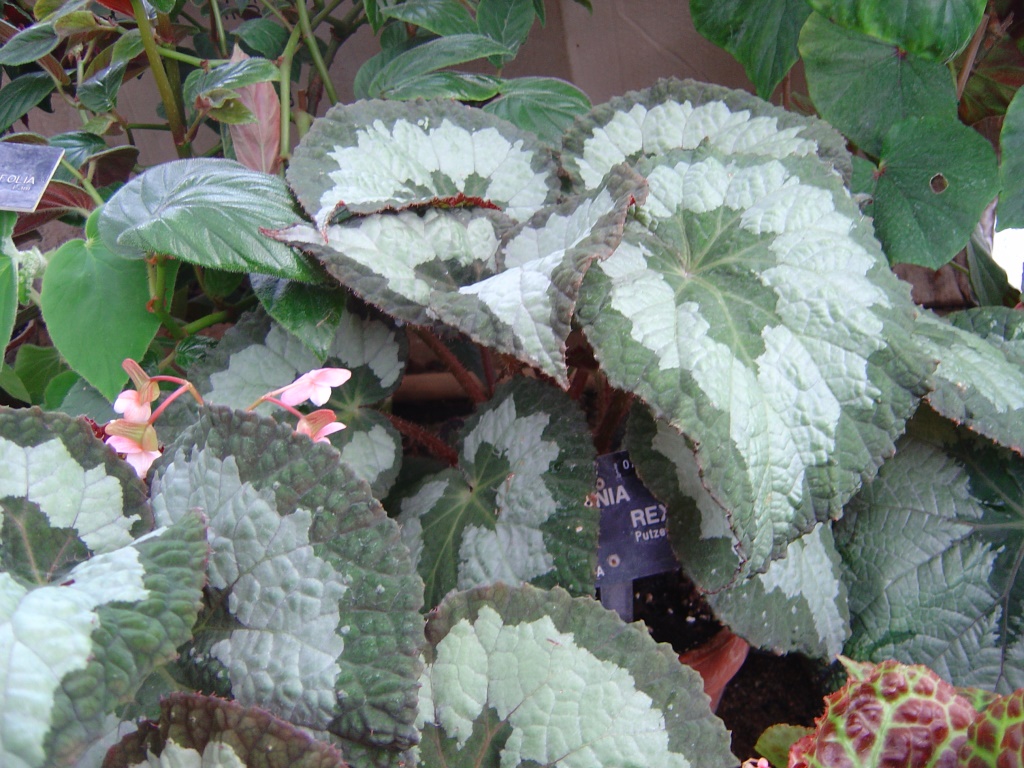
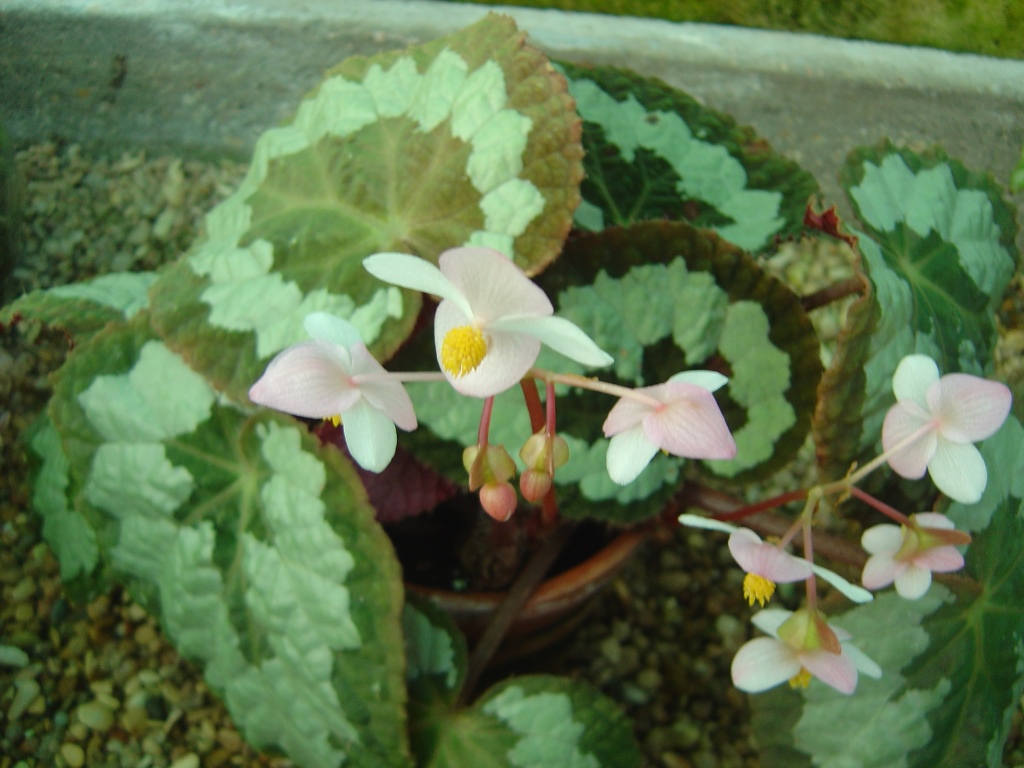
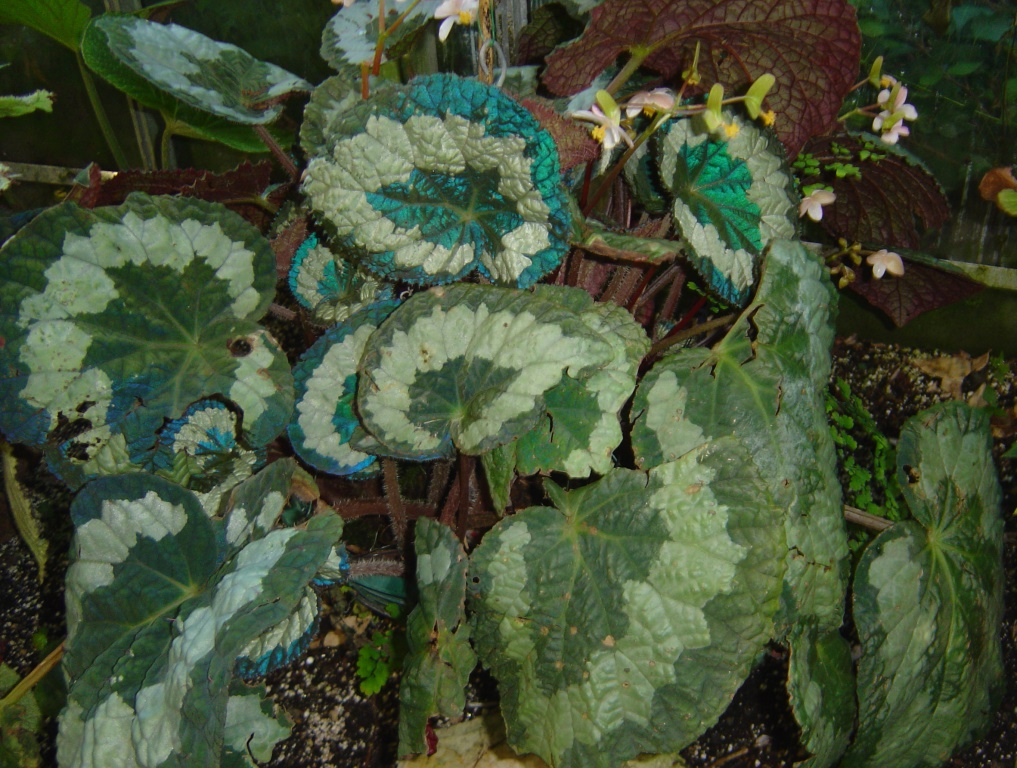
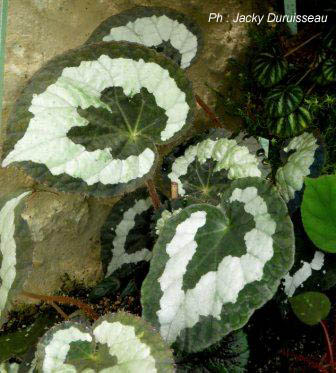
« A handsome, vigorous plant with a thick, fleshy, creeping, half-buried rhizome. Leaves large (30x20 cm), obliquely ovate, cordate, with rounded lobes touching or overlapping, glabrous above, slightly veined and puckered, irregularly crenate and ciliate at the margins, velvety dark green with a metallic blue sheen, bearing in the centre an irregular ring of intense, shining silvery white. The underside is hairy, reddish-green with brick-red veins. Petiole long (30 cm), fleshy, hairy, channelled above. » Translated from Charles Chevalier’s book « Les Bégonias » (1938)
Culture
This plant is only very slightly prone to powdery mildew and mealybugs. Take care with watering and avoid overwatering. It is even more beautiful planted directly in the ground in a greenhouse than in a pot, where it never reaches its full potential; it can also be planted out in a shady garden bed during the summer.
Propagation
This begonia is very easy to propagate from leaf cuttings. It can also easily be grown from seed.
Publication
To find out more, see the original publication in the 1857 Journal Général d’Horticulture by clicking here.