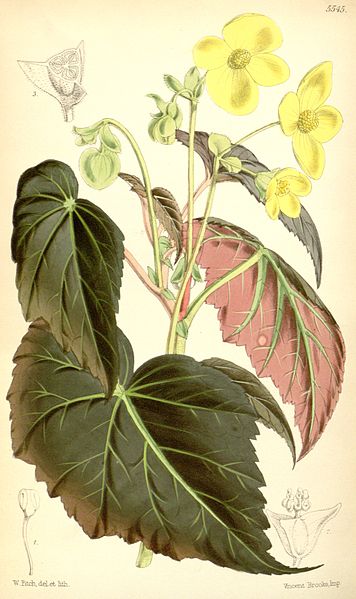
J.D Hooker 1865
Bolivia
Section Eupetalum
This species was introduced from Bolivia (collected at 3,600 m) in 1865 by Richard Pearce, a plant collector for the Veitch nurseries in England. It is one of the first tuberous begonias from the Andes. It was used to raise many cultivars of B. x tuberhybrida.
Appearance
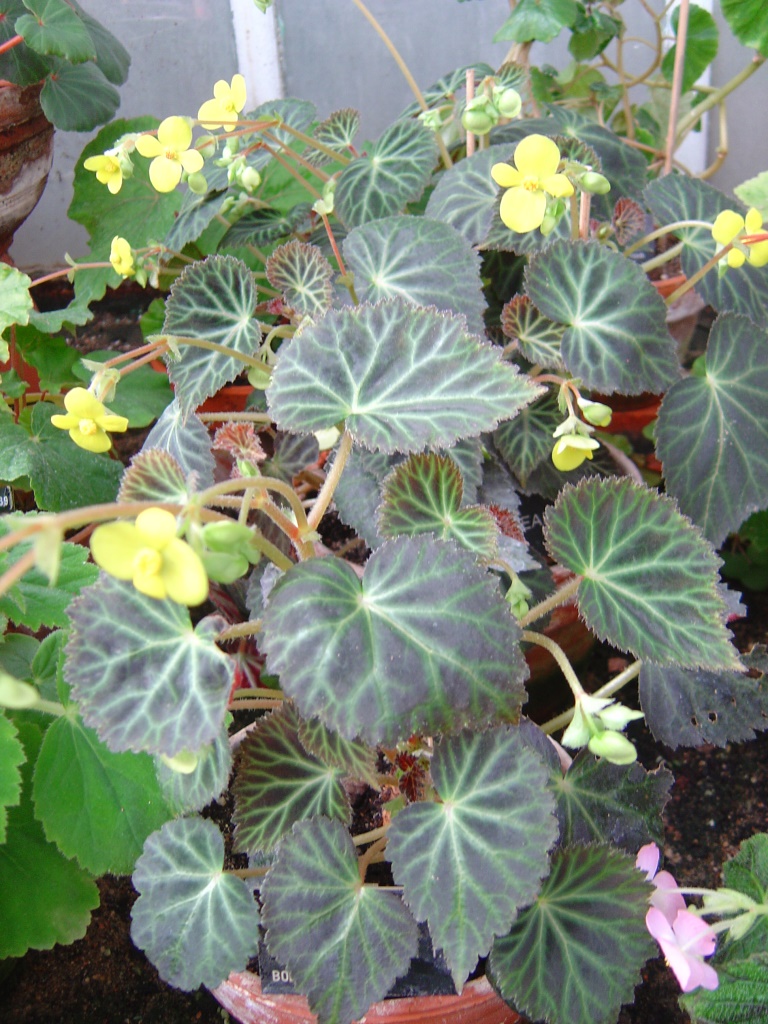
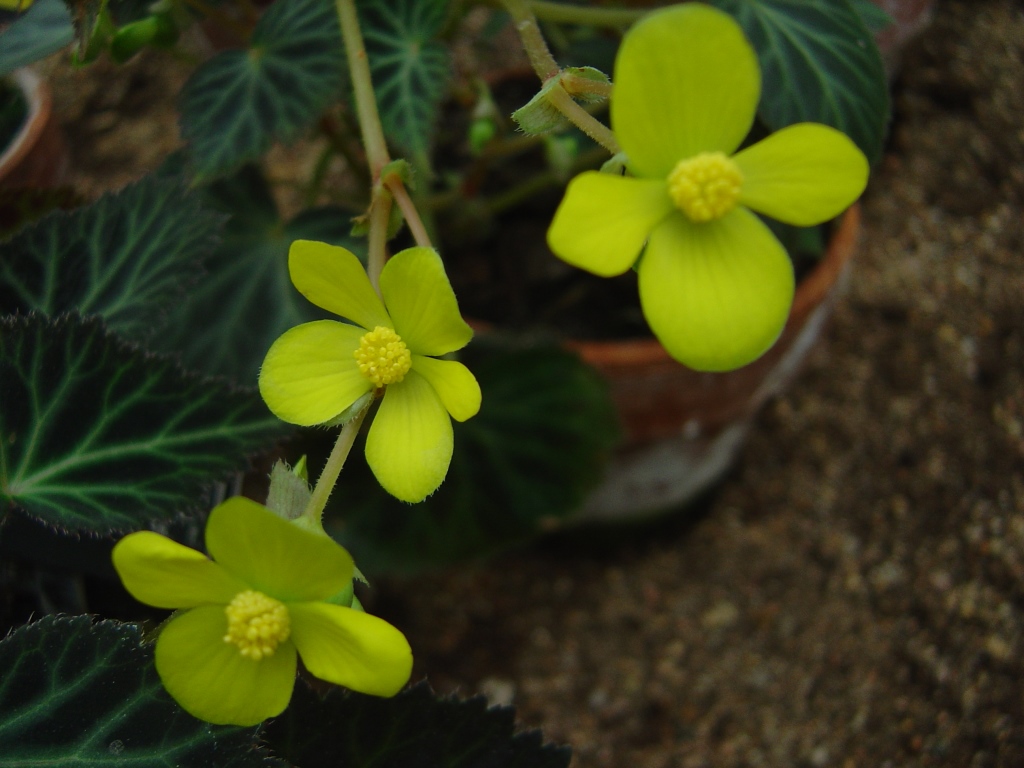
It is a dwarf plant, 15 to 20 cm tall, and one of the few botanical begonias with bright yellow flowers. Summer flowering continues until the dormant period, when the plant dies back. The leaves are fairly small, narrow, obliquely ovate and cordate at the base, with pale veins on a dark green blade, more or less red underneath.
Culture
This begonia is not very easy to grow, hence its rarity. It likes light and warmth. It absolutely hates excess moisture during the growing period. Do not put it outside like an ordinary tuberous hybrid. It needs a very marked, cold dormant period. It can be kept in a bed of cool peat (7 to 10°C), barely kept moist by a light misting once or twice a month.
Propagation
Propagation by leaf cuttings is possible, but sometimes gives rather weak plants. It is better to take stem cuttings or, better still, to grow it from seed. Pollinate the female flowers at the end of the season (October/November) to improve the success rate.
Publication
To find out more about this species, see the original publication in the 1865 “Botanical Magazine” by clicking here.